Simple Ledger Studios
Quarterly Tax Planner for Gig Workers – 1099 Income & Tax Set-Aside Spreadsheet
Quarterly Tax Planner for Gig Workers – 1099 Income & Tax Set-Aside Spreadsheet
Couldn't load pickup availability
Stay Ahead of Quarterly Tax Planning
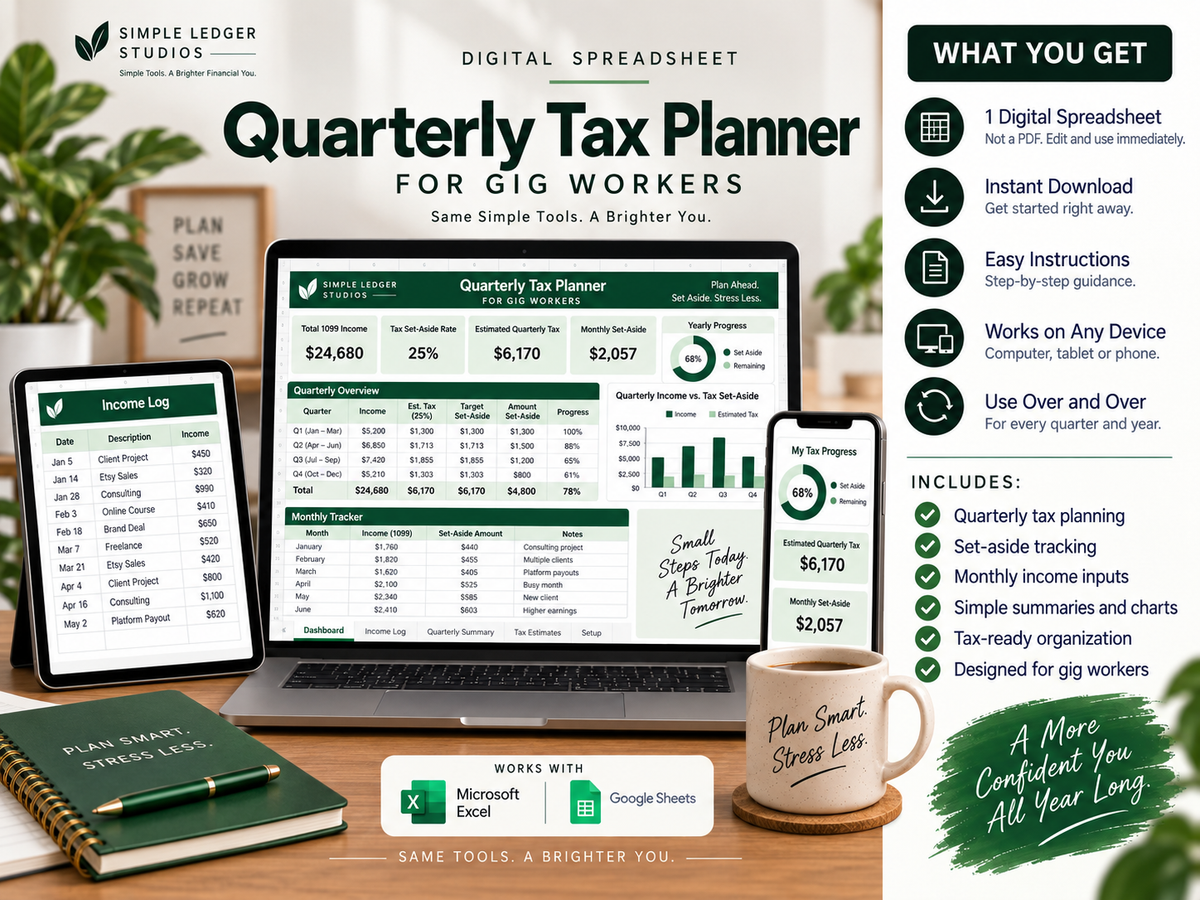
Built for gig workers and other independent contractors with irregular income. This digital planner helps you organize gross receipts, platform fees or adjustments, business-use expenses, planning set-asides, and estimated-tax payment records in one place.
Instant digital download. Open it with Google Sheets or Microsoft Excel Online and start organizing your records right away.
What You Can Organize
- Gig and freelance gross receipts
- Platform fees and adjustments
- Net deposited amounts
- Potential business expenses and business-use percentage
- Quarterly planning profit
- Adjustable planning set-aside percentage
- Suggested planning set-aside amount
- 2026 estimated-tax payment dates and payment records
2026 Payment-Date Reference
The planner includes the 2026 federal estimated-tax payment dates: April 15, 2026; June 15, 2026; September 15, 2026; and January 15, 2027. It also uses the IRS estimated-tax payment periods rather than calendar quarters.
Planning Tool — Not a Tax-Liability Calculator
The included set-aside percentage is an adjustable planning target. It is not an IRS tax rate and the workbook does not calculate your actual federal or state tax liability. Estimated tax can depend on income, deductions, credits, withholding, prior-year tax, and other rules.
How It Works
- Purchase the digital download.
- Download the spreadsheet file.
- Open it in Google Sheets or Microsoft Excel Online.
- Record income and business-use expenses as the year progresses.
- Review each payment period and update your planning set-aside.
- Track planned and actual estimated-tax payments in the checklist.
Digital product only: No physical item will be shipped.
This template is for organization, planning, and recordkeeping support only and does not provide financial, tax, or legal advice. Consult current IRS guidance or a qualified tax professional for tax decisions.
Share